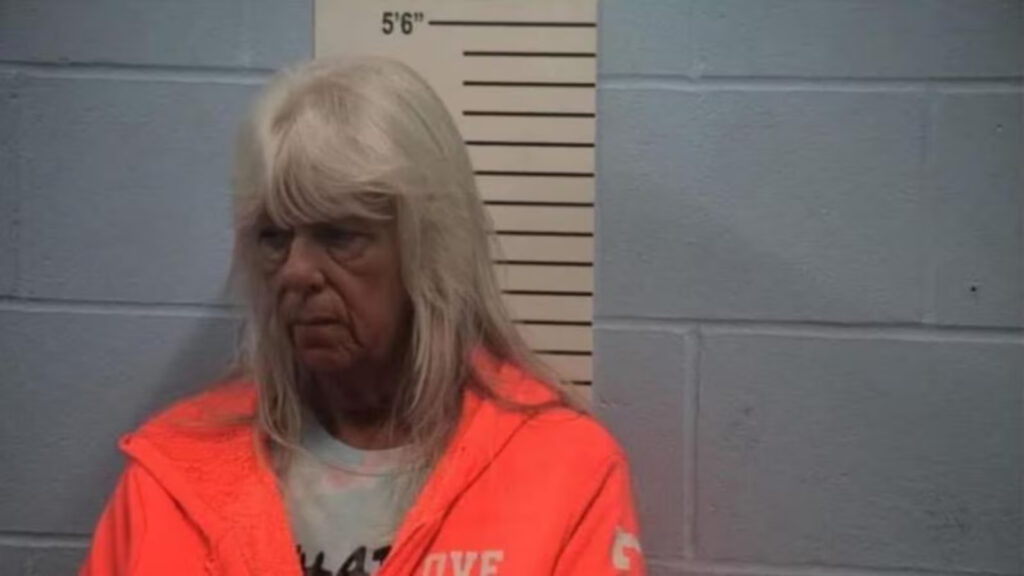
A Lincoln County judge did something on Sept. 3 that no state agency had done. He took Brenda Deutsch’s foster care license away.
Deutsch, 70, of Winfield, pleaded guilty in June to endangering the welfare of a child in the first degree, a class D felony. Judge Thomas J. Frawley sentenced her to seven years in the Department of Corrections, suspended execution, and three years of supervised probation. Two counts of abuse or neglect of a child were dismissed. The probation terms include no contact with the victim, mental health treatment, a cognitive behavioral intervention program, and one line in the judge’s hand: the defendant’s license to foster children is revoked.
FOX 2, the only outlet with a reporter in the courtroom, reported that Frawley called Deutsch’s conduct reprehensible and called out the state for leaving that license in place. He then turned to the young people in the gallery and apologized. He told them the system failed them.
That apology is the only accountability anyone in this story has been offered. It came from a judge with no authority over the Children’s Division.
What the record holds
The charge Deutsch pleaded to is narrow. Between January and April 2025 she sent an adopted daughter to a house in Texas she had not inspected, the house was filthy, and Texas child protective services removed the girl.
Her sentencing memorandum argues that is the whole of it. A mother who did not vet a friend’s home. Tried in the media over a rumor that she traded a child for a monkey, a rumor the memorandum says the investigation disproved. It notes she fostered more than a hundred children across 25 years, that former foster children came forward to call her caring, and that she sat 99 days in jail before her bond came down.
The probable cause statement filed by a Lincoln County detective in April 2025 describes a different household. A teenager who said she was hit with a paddle, with wooden trim pulled off the walls, and with shoes. Who said a family member held her arms down. Who said her clothes were taken and given away, that she was fed sandwiches, that she stole food. Who said she told people and nobody believed her.
Those counts were dismissed. They were never tried, and this paper does not treat them as proven. The teenager, now 17, is not named here.
One number survives both accounts. Lincoln County Prosecuting Attorney Michael Wood said last April that the address had drawn more than 200 hotline calls. Wood also said no police report from any of them ever reached his office.
Two hundred calls, and the license stayed valid until a judge struck it by hand on a sentencing exhibit.
Twenty homes, seventy-one children
This paper reported on Aug. 28 that Macon County had 20 licensed Children’s Division resource homes in June, three more than a year earlier. Eighteen were in use. Ten were listed as foster homes and 11 as relative homes.
Seventy-one children with a Macon case manager were in division custody that day.
Julia Chaney-Faughn, a Macon attorney and the parent of a child with disabilities, told this paper the county is short of homes and shortest for children with higher medical needs. The June report does not break out how many local licenses cover that level of care. Nobody from the division or the 41st Circuit Juvenile Office answered our questions for that story.
Ten weeks before it ran, that gap killed a Macon County boy.
Korbin Papadopoulos was 17. He had type 1 diabetes and autism. Macon County division workers placed him nearly 300 miles away in southwest Missouri, in a home licensed only for relatives, with a foster parent who later told law enforcement he had no training in managing diabetes. Nobody verified the license. Six days after the drop-off, workers learned the home could not keep him. They did not go get him.
On June 6, a supervisor tried to arrange a ride back to the Macon office and could not find anyone available. An on-call worker was told to make the drive. The foster parent said he would hold on until Monday. Korbin died that day of diabetic ketoacidosis.
His father, Teddy Papadopoulos, told a legislative committee last month that the division’s negligence killed his son.
The load the state built
The worker who could not find a ride that morning was carrying a caseload the state designed.
The hotline took roughly 160,000 calls last year. The division employs about 1,900 people and reports frontline turnover near 40 percent, down from 55 percent in fiscal 2022. Its own caseload standard, the same one national accreditors use, is no more than 15 open cases per worker. At the end of June, workers in 21 of Missouri’s 46 circuits averaged more than that. St. Louis County workers averaged 89 in June and 97 in July.
State law gives the division 45 days to finish an investigation, with documented extensions to 90 days, or 120 for sexual abuse. In January, four circuits exceeded a 45-day average. By July, 23 did. The St. Louis County average was 144 days.
An investigator who quit in Joplin in April described the job to the Missouri Independent as a printer that never stopped. Two or three new reports a day. Twenty-four hours to lay eyes on a child, three hours if it was an emergency, and a drive across the county to find a family with no address and no name. She had more than 30 open cases when she left. She said she loved the work.
The division had 79 vacant positions as of last November. This year’s budget funds 1,781 field positions, the same as last year. The seats are filled. The caseloads climbed anyway.
How the ship went down
In 2020, then-Gov. Mike Parson cut 300 state jobs. Two hundred were in the Department of Social Services and nearly 100 were in the Children’s Division. The department’s acting director turned down a Senate offer of money to help with staffing. Turnover hit 55 percent by fiscal 2022. The statewide backlog passed 10,000 cases by September 2023, with more than 6,000 overdue in St. Louis alone.
Lawmakers funded 100 positions back in 2023. By September 2024 the division had cleared 80 percent of the backlog. The backlog is back.
The payroll stayed flat while the paperwork grew. A November 2025 policy requires a supervisor meeting within 72 hours of an assignment even when the worker has already found the children safe, plus three consult guides and four supervisory checklists. An August 2025 message ended team decision-making meetings before a child is removed from a home. An April 2026 policy requires a meeting with the circuit manager, the supervisor’s supervisor, whenever a family scores high risk and the worker recommends neither services nor removal. A supervisor who spoke to the Independent in his personal capacity said leadership is doing the opposite of giving workers the tools and the trust to do the work well.
On Sept. 1 the division restructured its abuse and neglect response under centralized regional supervision with specialized career tracks. The department says the change came from staff feedback. It adds no staff. It is designed to maximize efficiency within current funding.
The ship went down in 2020. Missouri has spent six years telling the crew to bail faster, three feet under, and handing them a smaller cup every time it rewrites the manual.
Nobody owns the last decision
At the Aug. 26 accountability hearing, Sen. Cindy O’Laughlin, whose district includes Korbin’s parents, asked how the agency keeps a child safe when no appropriate placement exists. Director Sara Smith said those searches are all hands on deck. Central office, regional leadership, everybody looks. When there is nowhere to go, workers sit with children in hotels, because the division is who is charged with keeping that child.
Rep. Ian Mackey told her that all hands on deck is the opposite of a centralized system, and that making everyone responsible for finding a specialized placement is chaotic and unsustainable. O’Laughlin said that if that many people get notified when a placement is failing, somewhere the buck has to stop.
Sen. Mary Elizabeth Coleman asked Smith how many children had died in foster care since Smith became director in March 2025. Smith did not have the number. She said she would find out.
Gov. Mike Kehoe signed Executive Order 26-17 the day before that hearing. It creates a Child Welfare Task Force to write a single statewide definition of child safety. Recommendations are due Nov. 15. The task force dissolves Dec. 31. Coleman told the Independent she did not know the order was coming and believed it was a reaction to the legislature scheduling the hearing.
A shared definition of safety does not produce a medically trained foster home within driving distance of Macon, and it does not review a license that has drawn 200 hotline calls.
The 2020 cuts, the refused Senate money, the checklists, and the license Missouri left alone were all decided well above the pay grade of the worker who drives to a house at 10 p.m. with a name and no address. O’Laughlin asked the right question in August. Somewhere the buck has to stop, and so far the only person who has picked it up is a judge in Troy with no authority over any of this.
Children’s Division media declined an interview request from the Missouri Independent last month, citing the upcoming hearing, and did not respond to this newspaper’s questions about local licensed-home counts before our Aug. 28 story. Families who want to apply as foster families can call 800-554-2222 or use the Foster Parent Portal on the Children’s Division website.